Anhinga Trail, Everglades National Park
- Go in the dry season. Wildlife is generally most abundant during the cooler, drier months of December through March, when nesting birds, turtles, and alligators are all active and easier to spot.
- Time your visit around the light. Early morning draws songbirds, while wading birds like herons, egrets, anhingas, cormorants, and Purple Gallinules move throughout the day. Evening opens up a different set of species including Black-crowned Night-Herons, owls, and nightjars.
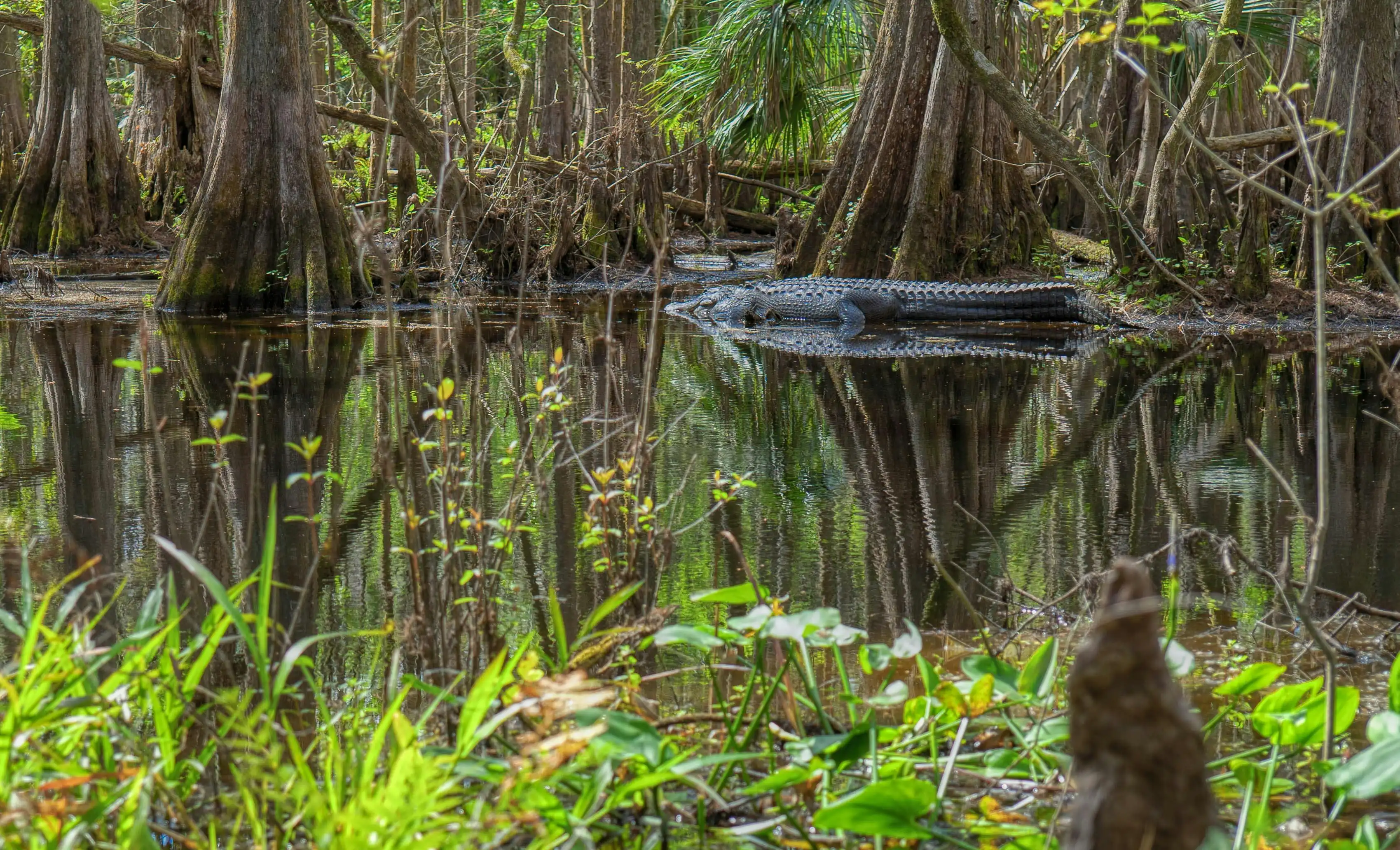
- Watch the water. The trail runs as a paved walkway and boardwalk over Taylor Slough, a freshwater sawgrass marsh, where alligators, turtles, anhingas, herons, and egrets are all regularly visible.
- Check the ranger calendar. Ranger led walks and talks often run from Royal Palm, but schedules change by season, so check the current Everglades calendar before you go.
- Getting there. The trailhead sits at the Royal Palm Visitor Center, about four miles from the park's main entrance. It is roughly 13 miles from Florida City, 50 miles from Miami, and 40 miles from Key Largo.
The Anhinga Trail cuts through Taylor Slough, a shallow freshwater channel that flows south through the eastern edge of Everglades National Park. The trail winds through and over sawgrass marsh and freshwater slough, and the landscape it passes through is wide and low, dominated by water, sky, and the deep green of emergent vegetation stretching to the horizon.
Step onto the boardwalk and the scale of it registers immediately. There is no canopy to filter the light here. The Anhinga Trail is exposed to the sun the entire time, which means the water below catches the full glare of the Florida sky and reflects it back in silver and grey. The boardwalk offers expansive views of the sawgrass prairies to one side while the slough opens up on the other, its dark water slow moving and clear enough to show turtles paddling below the surface.
Songbirds tuck into the branches of pond apple trees that flank the sides of the trail. Wading birds like herons and egrets move through the shallows throughout the day, joined by anhingas, cormorants, birds of prey, and purple gallinules. The anhinga itself is the one to watch: a large, dark water bird that dives for fish and then spreads its wings wide to dry in the sun, since unlike most waterbirds, its feathers absorb water rather than repel it.
During winter, the lower waters of the dry season concentrate aquatic wildlife in the slough, pulling alligators, fish, and birds into close proximity with the trail. At any time of year, an alligator could be floating just below the boardwalk or basking on the bank a few feet away. This is a place where the food chain is visible and close.
Getting to Anhinga Trail
The Anhinga Trail begins in the Royal Palm area of Everglades National Park. From the Homestead entrance, drive into the park and follow signs for Royal Palm and Anhinga Trail. The trail starts from the Royal Palm parking area, which also serves Gumbo Limbo Trail.
The Royal Palm Visitor Center has bathrooms, water fountains, and a gift shop. One heads up: don't be surprised if you see car windshields covered in tarps. Vultures tend to pick at the rubber around windshields, so the National Park Service keeps a box of tarps and bungee cords near the bathrooms for visitors to use.
When to go
The best time to visit the Anhinga Trail is during the dry season, from November to March. During this time temperatures are cooler, mosquitoes are less prevalent, and wildlife viewing is at its peak as animals congregate around remaining water sources. During these months the water levels in the surrounding glades drop significantly, pushing wildlife into the deeper sloughs like Taylor Slough, which the Anhinga Trail borders. When water disappears elsewhere fish concentrate in these remaining pools, drawing in wading birds and alligators.
For time of day, arriving just after sunrise or in the late afternoon rewards you with softer light and more pleasant colors. The main portion of the trail runs east-west along the slough, a layout that provides direct frontal lighting from dawn until dusk. Wildlife is typically most active before it gets too hot, so arriving before 10:00 in the morning gives you the best chance of seeing animals on the move.
What to look for
Anhingas drying their wings. These birds are the namesake of the trail. Males are all black and white while females have brown heads and necks. When they hunt they spear fish with their sharp beaks and then need to work the fish free before swallowing it. You'll see them perched along the trail with wings spread wide letting the moisture evaporate.
Alligators in the slough. Alligators are usually easier to spot in the warmer summer months in the morning. In winter look for them to emerge and bask in the sun as the day warms up. From the observation platform spur you can watch alligators drift through the inky water at closer range than most anywhere else in the park.
Pond apple trees and Purple Gallinules. As you walk, keep your senses open as songbirds may be tucked into the branches of the pond apple trees that flank the sides of the trail. Purple Gallinules are also worth watching for as they move around the lily pads along the water's surface, using their oversized feet to walk across floating vegetation.
Insider Tips
Skip the main overlook: walk the back half of the loop
Most visitors cluster around the first boardwalk section near the parking area, where the trail runs along the main slough. Walk past that crowd and continue to the quieter back half of the loop, where the boardwalk curves around a smaller open pond. Birds concentrate here in the dry season as water levels drop and fish move into these remaining pools, so you often get closer views without anyone in your frame. Get low by crouching at the boardwalk railing and shoot across the water surface to pick up reflections of anhingas and herons in the still water below.
Wear lightweight sun protection, not heavy layers
The Anhinga Trail is a fully exposed boardwalk with almost no shade cover. A light long sleeve sun shirt and a wide brim hat do more for you here than sunscreen alone, and they hold up through the humidity without weighing you down. Closed toe shoes with grip matter too since the boardwalk can get slick near the water's edge, especially on cool mornings when condensation builds on the wood.
Stop at Robert Is Here on the way in from Miami
Driving down from Miami on Hwy 1, pull off in Homestead at Robert Is Here before you hit the park entrance. This family run fruit stand has operated at the same corner since 1959 and sells locally grown tropical fruit, fresh smoothies, and fruit milkshakes made with produce cut daily on site. Grab a milkshake and some snacks to carry in since there is no food service inside Everglades National Park along the Royal Palm corridor.
Nearby Hikes
Trails worth your time when you're in the area.
Gumbo Limbo Trail
Starting at the same Royal Palm trailhead as Anhinga Trail, Gumbo Limbo winds through a shaded hardwood hammock where the terrain sits just a few inches higher than the surrounding marsh. That small difference in elevation is enough to support gumbo limbo trees, royal palms, strangler figs, and resurrection ferns. A short boardwalk section crosses over a solution hole formed when acids from decaying plant matter dissolve the limestone below. It pairs naturally with Anhinga Trail as a quick second walk from the same parking area.
View on nps.govPa-hay-okee Overlook Trail
About 13 miles west of the park entrance on the Main Park Road, this short boardwalk trail leads to a raised observation platform above the sawgrass prairie. From the platform you get a wide, open view across the freshwater marsh and dwarf cypress that define the heart of the Everglades. "Pa-hay-okee" is a Seminole phrase for "grassy waters" and the overlook makes that name easy to understand. Early morning visits reward you with wading birds working the shallow water below.
View on nps.govMahogany Hammock Trail
Located about 20 miles down the Main Park Road, this boardwalk loop passes through one of the largest remaining stands of mahogany trees in the United States. The hammock sits slightly above the surrounding marsh, creating a shaded interior dense with air plants, gumbo limbo trees, and ferns. It is a noticeably different environment from the open sloughs near the park entrance and gives a clear sense of how small elevation changes shape entirely different ecosystems across the Everglades.
View on nps.govShark Valley Tram Trail
A flat 15-mile paved loop at the Shark Valley entrance, accessible by foot or bike (rentals available on site). The trail follows the edge of the Shark River Slough through open freshwater marsh where alligators are a near constant presence along both sides of the path. At the halfway point a 45-foot observation tower gives you the widest view available anywhere in the park. The distance and lack of shade make this a bigger commitment than the park's shorter boardwalk trails, so an early start and plenty of water matter here.
View on nps.govPinelands Trail
A short loop trail about 7 miles from the park entrance that passes through a pine rockland ecosystem, one of the rarest in the world. The forest here grows directly on exposed limestone, and the understory is open enough to see clearly between the slash pines and saw palmettos. Look closely at the rock surface and you will find solution holes and fossilized marine life in the limestone, evidence of the ancient shallow sea that once covered this part of Florida.
View on nps.govEmbroidered Everglades National Park Hat - 100% of profits donated to National Parks
100% of the profit from every hat goes straight to the National Parks. Not a round-up. Not a percentage. The whole margin.
Shop this hat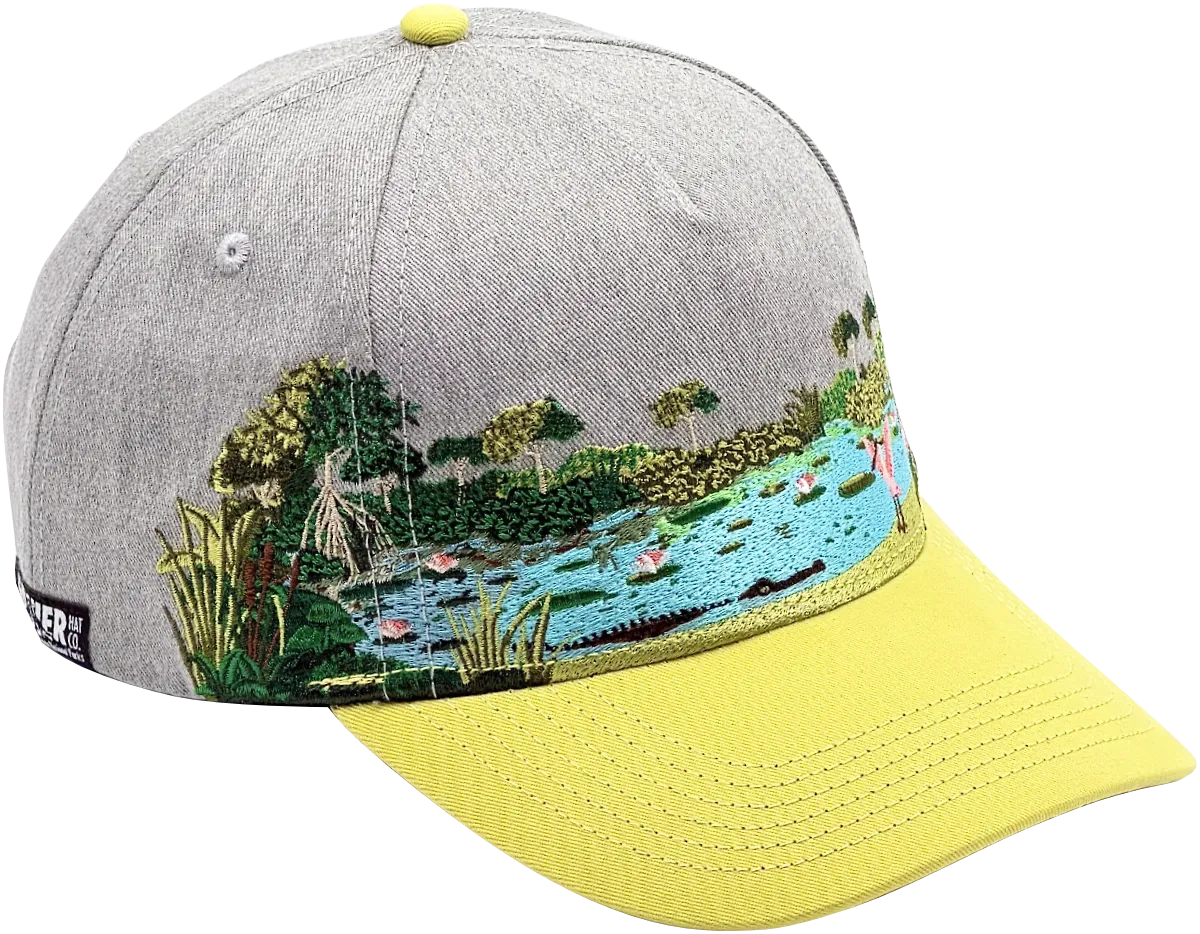
Protecting Everglades
The Everglades is one of the most ecologically significant and most pressured landscapes in the United States. Development pressures from agriculture, industry, and urban areas have destroyed more than half of the original Everglades. Rising sea levels threaten the park's freshwater marshes and mangrove forests, putting imperiled subtropical biodiversity further at risk. Places like Anhinga Trail matter precisely because the trail runs directly through that fragile zone. The trail crosses Taylor Slough, a freshwater sawgrass marsh, where alligators, turtles, anhingas, herons, and egrets are visible from the boardwalk. The park is the most significant breeding ground for tropical wading birds in North America and is home to 36 threatened or protected species, including the Florida panther, American crocodile, and West Indian manatee. Losing these habitats doesn't just affect wildlife. The majority of South Florida's fresh water, stored in the Biscayne Aquifer, is recharged in the park, meaning its health directly supports the region people live in too.
That's why Rainier Hat Co. exists as more than a gear brand. We're a funding vehicle for the parks, and every hat we sell puts money directly toward protecting places like this. When you pick up the Everglades National Park Hat, 100% of the profit goes as a donation to the National Parks. Not a portion. Not after overhead. All of it. Because the Everglades doesn't need a souvenir industry. It needs people who actually give a damn about keeping it intact.