T.A. Moulton Barn, Grand Teton National Park
- The barn sits along Mormon Row Historic District, accessible via Antelope Flats Road just east of Moose Junction off Highway 26/89
- Arrive at sunrise for the most dramatic light on the Teton Range as it catches the peaks above the barn
- Summer brings wildflowers and bison grazing nearby while winter offers snow covered rooftops and far fewer visitors
- Walk the full Mormon Row loop to see additional homestead structures and get a sense of the broader settlement history
- No fee or permit is required to visit, but parking is limited so arriving early or late in the day helps you avoid the midday crowds
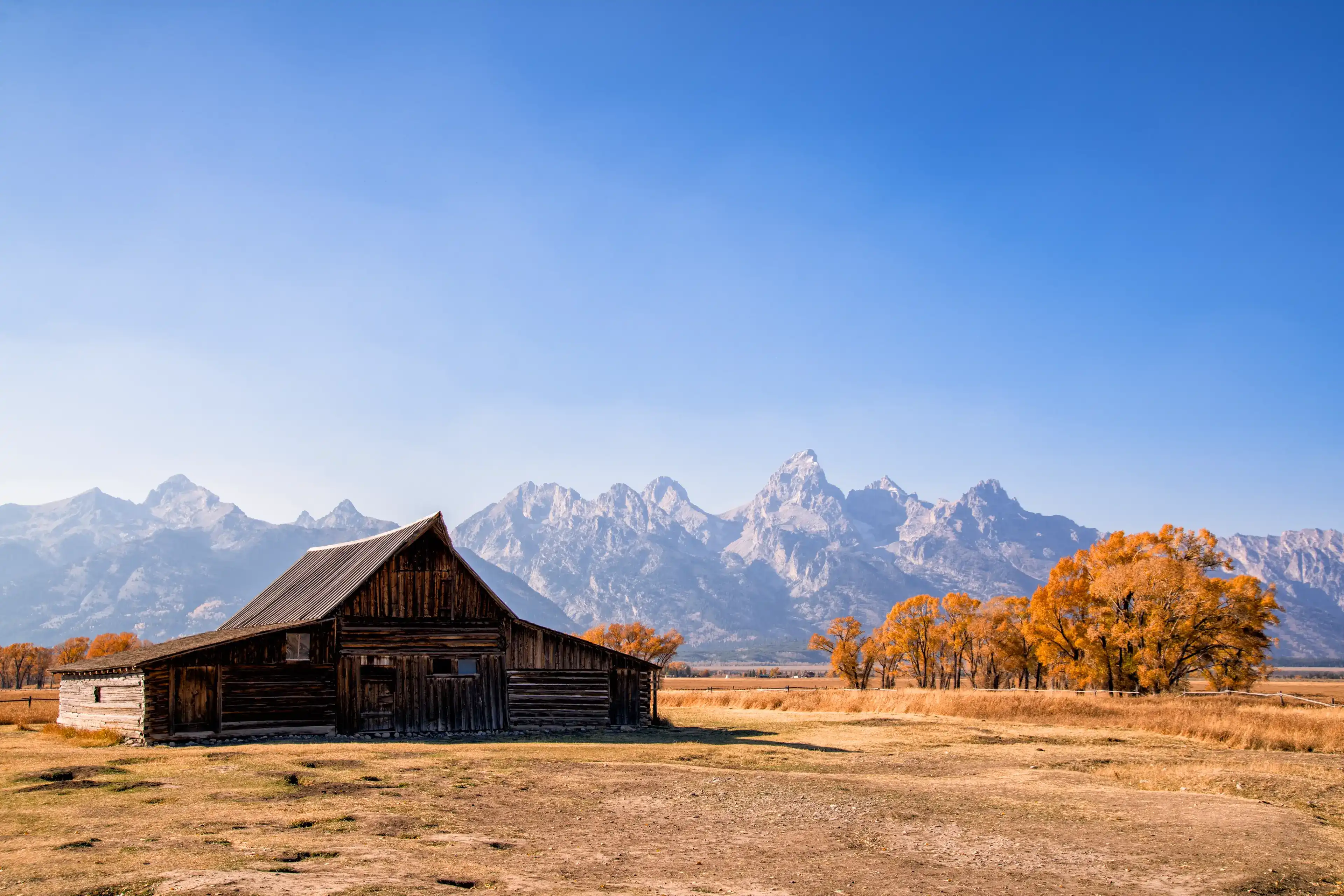
Few photographs capture the American West quite like the view from Mormon Row looking toward the Teton Range with the T.A. Moulton Barn in the foreground. The barn itself is a weathered wood structure built in the early 1900s by homesteader Thomas Alma Moulton, and it remains one of the most photographed subjects in the entire national park system. What makes this spot so compelling is not just the barn but the relationship between the human scale of the building and the sheer vertical rise of the Teton Range behind it.
Standing here on a clear morning, the peaks catch the first light well before the valley floor warms up. The sagebrush flats stretch out in muted silver green tones, and bison often graze within close range of the road, moving slowly through the grass. In summer, patches of yellow and purple wildflowers push up through the dry soil around the historic structures. In winter, the roofline of the barn carries a thick cap of snow while the surrounding landscape goes quiet and pale.
The air at this elevation carries the smell of sage, especially after rain. The sounds here are mostly wind and birds, with the occasional bison moving through the brush. The Tetons rise abruptly from the valley with no foothills to soften the transition, so the barn sits in this open flat space with nearly 7,000 feet of vertical relief visible directly to the west. It is a rare place where geology, history, and wildlife overlap in a single field of view.
Getting there
T.A. Moulton Barn sits along Mormon Row Historic District in Grand Teton National Park. From Moose Junction on Highway 26/89, turn east onto Antelope Flats Road and drive about 1.5 miles. The barn appears on your left with the Teton Range rising directly behind it. A small gravel pullout provides parking, though it fills quickly during peak season.
When to visit
Sunrise is the move here. The Teton peaks catch alpenglow while the barn and surrounding flats stay in cooler shadow creating a natural contrast that holds for roughly 20 to 30 minutes after first light. Summer mornings in June and July also bring wildflowers across the sage flats which adds foreground color to the scene. Winter visits reward the patient traveler with snow loaded rooftops and a quieter road with far thinner crowds.
What to look for
Keep an eye on the barn's original weathered siding and the way the roof lines angle toward the peaks. Bison frequently graze the open flats between the barn and the road particularly in early morning and around dusk so give them plenty of space. Further along the row, additional homestead structures from the early 1900s settlement era are worth a slow walk and offer a broader sense of how families worked this land against a demanding climate.
Insider Tips
Walk the fence line east of the barn for a less crowded angle
Most visitors cluster directly in front of the T.A. Moulton Barn at the main gravel pullout. For a cleaner composition with more sagebrush foreground and fewer people in your frame, walk back from the fence line on the east side of the barn and use a longer focal length to compress the distance between the structure and the peaks behind it. This approach keeps the Teton Range prominent in the frame rather than shrinking it behind the barn the way a wide angle lens tends to do when you stand too close.
Dress for a cold morning even in summer
Jackson Hole valley mornings run cold well into June and the open flats around Antelope Flats Road do nothing to block the wind coming off the range. Wear a windproof layer over a midweight fleece so you can strip down as the sun clears the eastern ridge. Sturdy trail shoes work fine for the flat terrain around the barn but pack an extra pair of dry socks if you plan to walk through the sage flats after rain since the ground can hold moisture longer than it looks.
Grab coffee at Cowboy Coffee Co. in Jackson before heading north
If you are driving up from Jackson for a sunrise visit, Cowboy Coffee Co. on the Town Square at 125 N. Cache St. opens at 6 AM daily and sits directly on your route north toward Moose Junction. It is a local institution that roasts its own beans in Jackson Hole and serves solid breakfast sandwiches alongside the coffee. Picking up a hot drink here before the 30 minute drive to the barn means you arrive warm and ready before the crowds.
Nearby Hikes
Trails worth your time when you're in the area.
Taggart Lake trail
Starting from the Taggart Lake trailhead on Teton Park Road, this route crosses open sagebrush flats before entering a forest zone burned in the 1985 Beaver Creek fire. The regrowth there is still visible and gives you a clear look at how fire shapes forest succession in the Tetons. Taggart Lake itself sits in a glacially carved basin with the Cathedral Group peaks rising directly above the water.
View on alltrails.comMormon Row and Antelope Flats loop
This flat gravel and dirt loop takes you past the T.A. Moulton Barn and the other remaining homestead structures along Mormon Row before looping back through open sagebrush terrain. Bison are frequently present on the flats throughout the route. The Teton Range stays visible to the west for nearly the entire walk making this one of the more scenic flat walks in the park.
View on alltrails.comPhelps Lake loop
Leaving from the Laurance S. Rockefeller Preserve trailhead, this loop climbs through forest to the Death Canyon Shelf overlook before descending to Phelps Lake. The lake occupies a moraine dam left by glacial activity and sits at the mouth of Death Canyon with excellent views up into the range. The preserve trailhead has a small interpretive center worth stopping into before or after the hike.
View on alltrails.comJenny Lake loop
Jenny Lake sits in a basin carved by glaciers and ringed by conifer forest with the central Teton peaks rising to the west. The full loop circles the lake on a well maintained trail and can be shortened by taking the ferry across the southern section. Inspiration Point and the lower cascade of Hidden Falls are both accessible via a short side route from the western shore.
View on alltrails.comDelta Lake via Lupine Meadows
This route gains elevation quickly from the Lupine Meadows trailhead and finishes with a steep talus scramble to reach Delta Lake, a glacially fed tarn that sits directly below the Grand Teton. The water takes on a milky turquoise color from glacial flour suspended in the lake. The upper section requires careful footing on loose rock and route finding skills since there is no formal maintained trail above the Bradley and Taggart junction.
View on alltrails.comEmbroidered Grand Teton National Park Hat - 100% of profits donated to National Parks
100% of the profit from every hat goes straight to the National Parks. Not a round-up. Not a percentage. The whole margin.
Shop this hat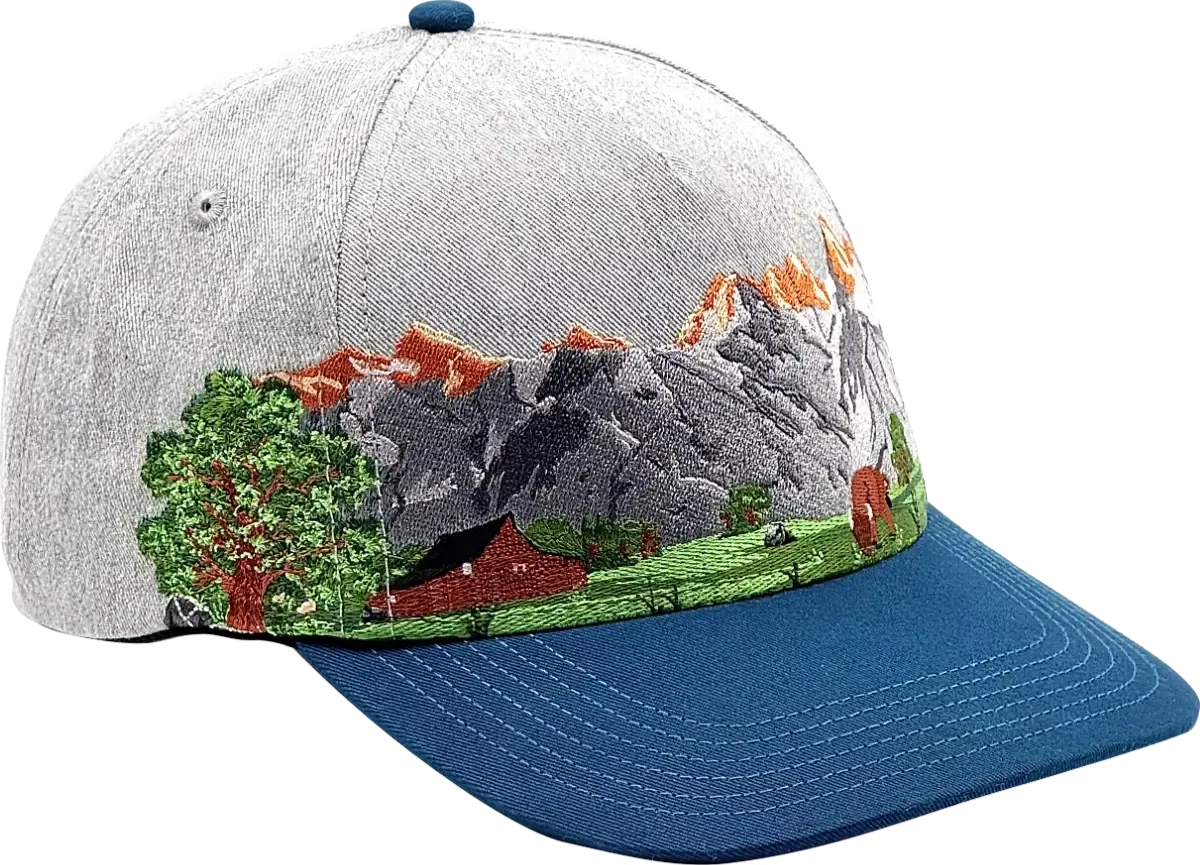
Protecting Grand Teton
The T.A. Moulton Barn is listed on the National Register of Historic Places and sits within the Mormon Row Historic District, a designation that helps ensure the structures and the landscape around them remain intact for future visitors. Grand Teton National Park protects not just the geology and wildlife of the region but also the human history layered into places like Antelope Flats, where generations of families worked the land against the backdrop of the Teton Range. Keeping these places whole means that people a hundred years from now can still walk the same ground, see the same peaks, and understand what it took to settle this valley.
Rainier Hat Co. exists to support that kind of preservation directly. Every hat we make is connected to a specific park or place, and 100% of the profits from each sale go straight to the National Parks. Buying the Grand Teton National Park hat is a simple way to put money toward the landscapes and structures that make visits like this one possible. It is not a souvenir so much as a contribution, one that travels with you long after you leave the valley.